
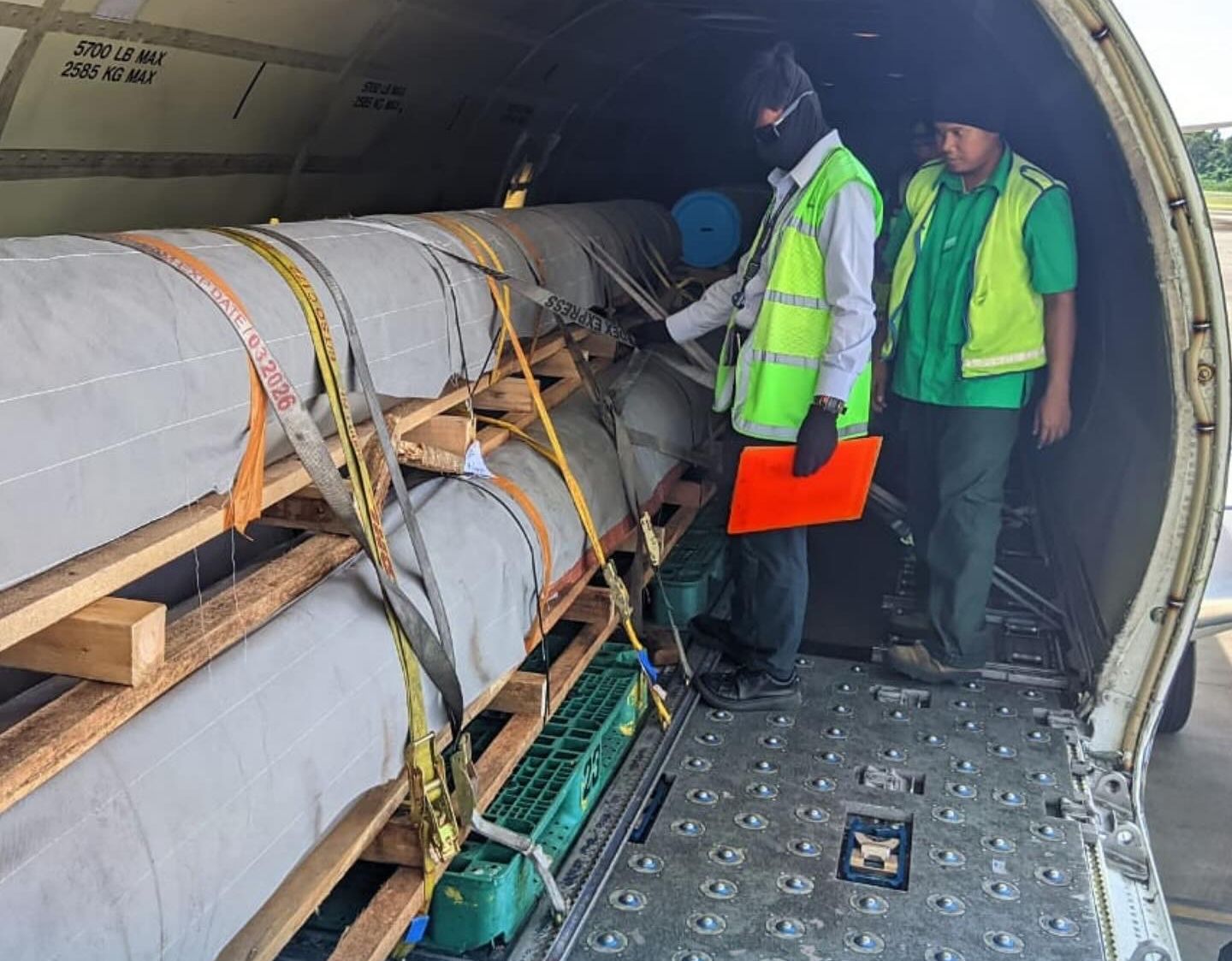
Kargo udara bisa tertahan sebelum masuk pesawat jika ukuran, berat, isi, atau dokumennya belum jelas. Periksa data berikut sebelum pickup.
Ukur setelah dikemas
Catat panjang, lebar, tinggi, dan berat setiap koli setelah dikemas. Jumlahkan berat totalnya dan sebutkan apakah koli boleh ditumpuk. Data ini dipakai untuk menghitung berat yang ditagih (chargeable weight) dan ruang di pesawat.
- jumlah koli
- ukuran dan berat per koli
- berat total
- boleh atau tidak boleh ditumpuk
Cocokkan barang dan dokumen
Nama barang, jumlah, berat, invoice, dan packing list harus sama. Barang berbahaya butuh MSDS dan persetujuan maskapai. Beri tahu kami sejak awal jika ada baterai, cairan, magnet, atau barang sensitif lain.
Foto kemasan membantu tim melihat bentuk koli, label, titik angkat, dan kondisi barang sebelum pickup.
- invoice dan packing list
- MSDS jika barang berbahaya
- foto kemasan dan label
- petunjuk penanganan
Konfirmasi cut-off dan penerima
Pastikan jam pickup, cut-off terminal, rencana penerbangan, nomor SMU jika sudah ada, penanggung jawab penerima, dan alamat pengantaran. Untuk koli besar, cek apakah lowbed, trailer, atau crane bisa masuk ke titik muat dan bongkar.
Sepakati siapa yang mengabari jika jadwal berubah dan siapa yang menandatangani bukti terima. Pemeriksaan singkat sebelum pickup bisa mencegah barang dikembalikan dari terminal.