
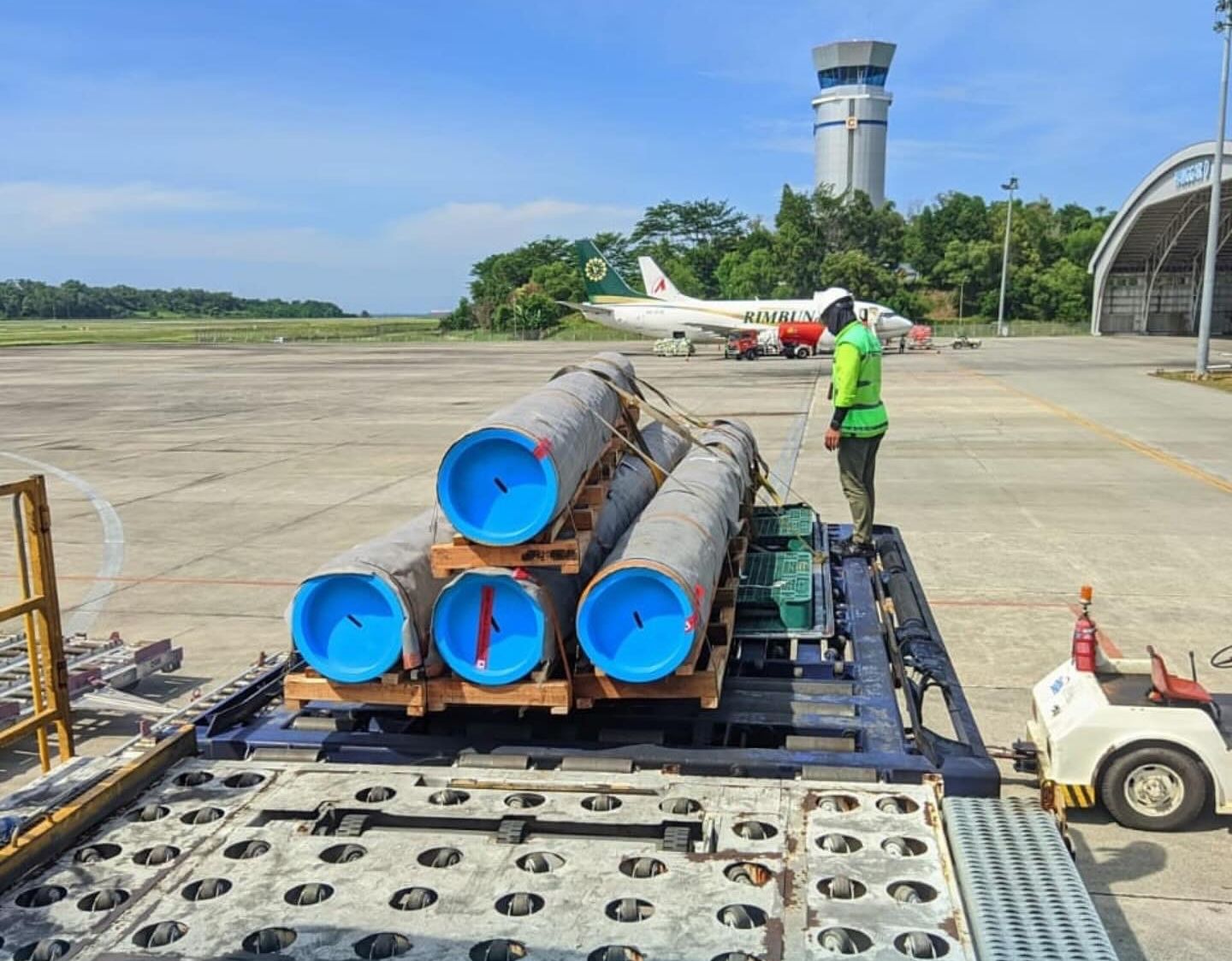
When critical mining machinery or commercial vessels face unplanned shutdowns (hot-shot shipments), air cargo is the fastest recovery pathway. However, aviation security regulations are exceptionally strict. Inaccurate paperwork, substandard packaging, or X-Ray screening discrepancies will cause immediate cargo rejections at airport line-one terminals.
Air Waybill (SMU) issuance and terminal cut-off deadlines
The domestic Air Waybill (Surat Muatan Udara / SMU) is the binding contract of carriage between shipper and air carrier, documenting origin, destination, piece counts, gross weight, volume dimensions, and cargo classifications.
Every scheduled cargo flight operates with an unyielding cut-off deadline—typically 4 to 6 hours before Estimated Time of Departure (ETD). Missing terminal cut-offs results in offloading and costly 24-hour delays to subsequent flights.
- Air Waybill function: legal contract of carriage and flight manifest record
- Terminal cut-off time: cargo must clear line-one screening 4–6 hours prior to departure
- TMS integration: air waybill numbers logged into digital operating systems for live tracking
Volumetric weight vs actual scale weight calculations
Airlines invoice freight based on chargeable weight, defined as whichever is higher between actual scale weight and volumetric weight. Bulky but lightweight packages are charged under the volumetric formula.
The domestic IATA volumetric formula is Length × Width × Height (in cm) divided by 6,000. For instance, a crate measuring 120 × 80 × 100 cm weighing 100 kg scales to 160 kg volumetric weight, meaning the airline invoices at 160 kg.
- IATA volumetric formula: (L × W × H in cm) / 6,000 = chargeable volumetric kilograms
- Chargeable weight rule: freight rates apply to the greater of gross weight and volume weight
- Packaging efficiency: eliminate excess void volume inside crating to reduce freight costs
IATA timber crating standards and X-Ray screening compliance
Industrial components like hydraulic pumps, gearboxes, and structural spares frequently require professional export crating on heavy forklift skids.
Machinery previously exposed to engine oils or hydraulic fluids must be thoroughly flushed, drained, and degreased before airport arrival. Any fluid leaks or odor triggers immediate rejection by Aviation Security (Avsec) screening inspectors.
- Solid timber crating: engineered wood frameworks withstand multi-tier aircraft stacking
- Complete fluid drainage: components must be bone-dry to pass Avsec inspection
- Digital inspection trail: photographic logs of unboxed items, crating, and air waybill labels
Dangerous Goods (DG) compliance and documentation
Consignments including lithium batteries, compressed gas cylinders, paints, and flammable lubricants fall under the nine official Dangerous Goods categories.
DG shipments require an active 16-section Material Safety Data Sheet (MSDS), UN-certified packaging, dual-side hazard class labeling, and processing by certified Dangerous Goods Regulations (DGR) specialists prior to airline handover.
- 16-section MSDS: details UN identification number, packing group, and emergency measures
- UN-certified packaging: drop-tested containers built to withstand pressure variations
- IATA hazard labeling: diamond hazard symbols applied prominently on two opposing crate faces
Suvarna Trans rapid ground handling near Soekarno-Hatta Airport
Situated in Jurumudi and Benda, Tangerang—minutes from the cargo gates of Jakarta Soekarno-Hatta International Airport (CGK)—Suvarna Trans coordinates time-critical shipments with rapid ground mobilization.
Our mobile operating system manages collection (Delivery), professional crating (Repacking), air waybill processing, and inspection photography. Shippers retain complete operational visibility from warehouse pickup to final destination touchdown.
- Airport perimeter facility: immediate access to terminal cargo gates at Jakarta (CGK)
- Integrated mobile application: digital air waybill logging, packing photos, and weight verification
- 24/7 hot-shot coordination: dedicated air freight support for marine spares and mining emergencies